Have vehicle frames and vehicle parts sandblasted in Kirchardt
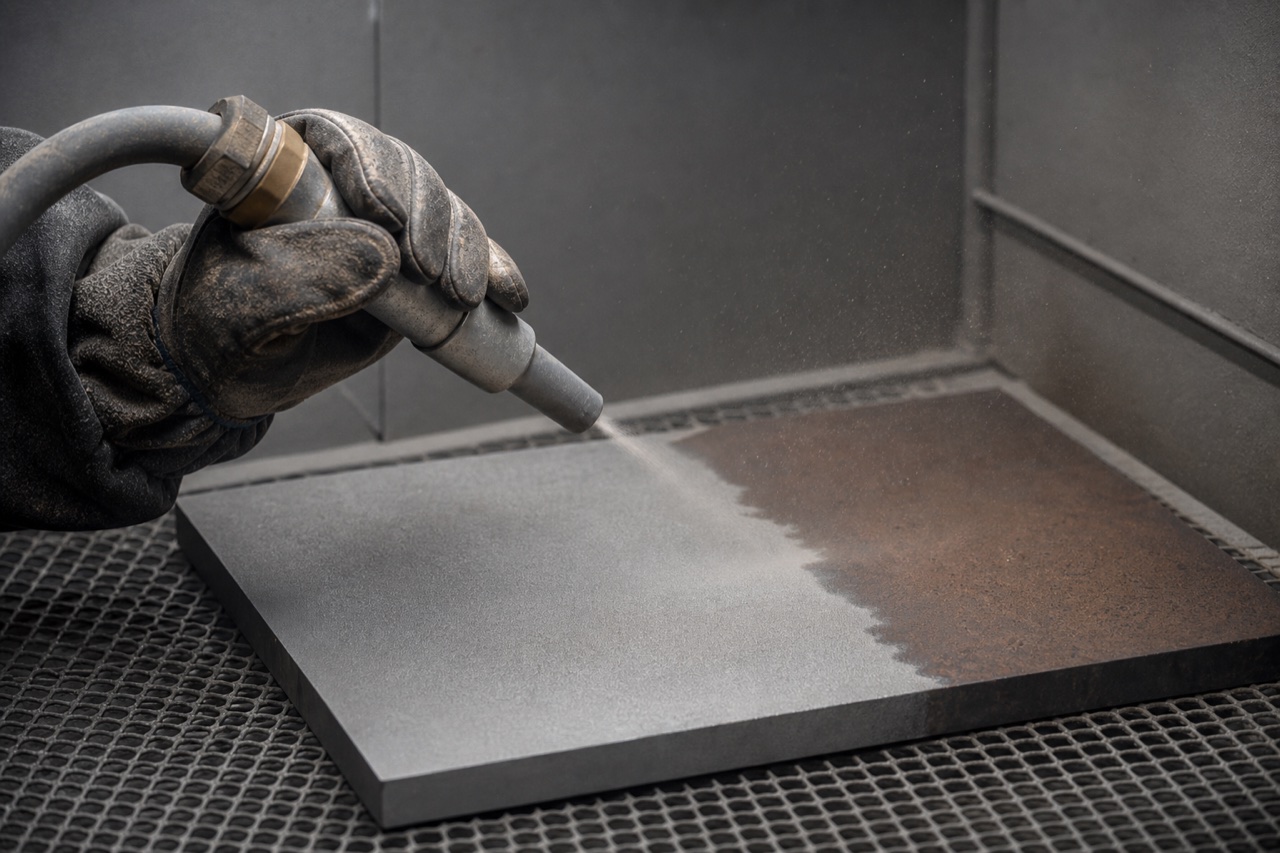
When sandblasting can be useful
- Removal of unstable old coatings
- Preparation of corroded steel components
- Processing of frame, holder and body parts
- Preparation for primer or corrosion protection
- Cleaning robust metallic surfaces
Material, blasting media and target condition
- Base material and material thickness
- Type and adhesion of existing layers
- Degree of corrosion
- sensitive areas and sealing surfaces
- required surface roughness
- intended coating system
Protection of sensitive vehicle areas
From the initial state to the coating
- Evaluate the component and coating structure
- Determine the scope of protection and dismantling
- Define a suitable blasting process
- Check and clean the surface
- Coordinate subsequent coating timing and technology
Surface in comparison
From the burdened stock to the defined basis
The direct comparison shows what controlled surface preparation can achieve: The condition becomes visible, assessable and ready for the next work steps.


Old coating, traces of corrosion and locally different surfaces.
Evenly prepared for inspection, corrosion protection and subsequent construction.
Another practical example
Corroded connection areas on the vehicle frame


Significant corrosion on connections, holders and structural transitions.
Contours and connection areas are evenly exposed and can be checked.
The specific result depends on the material, initial condition, accessibility and agreed processing goal.
Further processing
From prepared steel to a resilient protective structure
The blasted surface is not a final state. It creates the controllable basis for testing, corrosion protection and a coating tailored to the component.
In the example shown, the prepared vehicle frame is then given an even black paint finish.

Walk around the finished painted vehicle frame
Sandblasting in the vehicle project
Suitable surfaces that primarily need to be cleaned can be used Dry ice blasting on the vehicle be an alternative. If there are already technical anomalies, this connects them Vehicle analysis the exposed condition with a structured assessment.
Sandblasting at our location in Kirchardt
Leisenbergweg 5
74912 Kirchardt
Would you like to have components or a structure shined?
Frequently asked questions about sandblasting
Important information on surface preparation in vehicle construction.
Can every vehicle part be sandblasted?
No. Suitability and procedure depend on the material, material thickness, geometry, coating and existing installations. Delicate parts require a different procedure or must be dismantled.
Is real sand always used when sandblasting?
No. Depending on the task, different blasting media are used. The selection and process parameters must match the material and the desired surface condition.
Does sandblasting completely remove rust?
Blasting can remove corrosion and unstable layers. However, deep corrosion damage, loss of material and cavities that are difficult to access must be assessed separately.
Does it have to be primed immediately after blasting?
Bare steel can quickly re-oxidize. The time and preparation leading up to priming should therefore be coordinated with the intended coating system.
Can entire vehicle frames be blasted?
This can be possible, but requires careful preparation. Cables, bearing points, electrical systems, sealing surfaces and cavities must be taken into account and, if necessary, protected or dismantled.
What information is needed for an initial assessment?
Photos, dimensions, material, known coatings, visible corrosion, desired target condition and information about the planned subsequent coating are helpful.