Low joints even on complex geometries.
- Coat ribs, profiles and embossed surfaces
- Reduce direct contact surfaces with cold metal
- Add condensation management
- Acoustically calm selected areas
Intended as a system
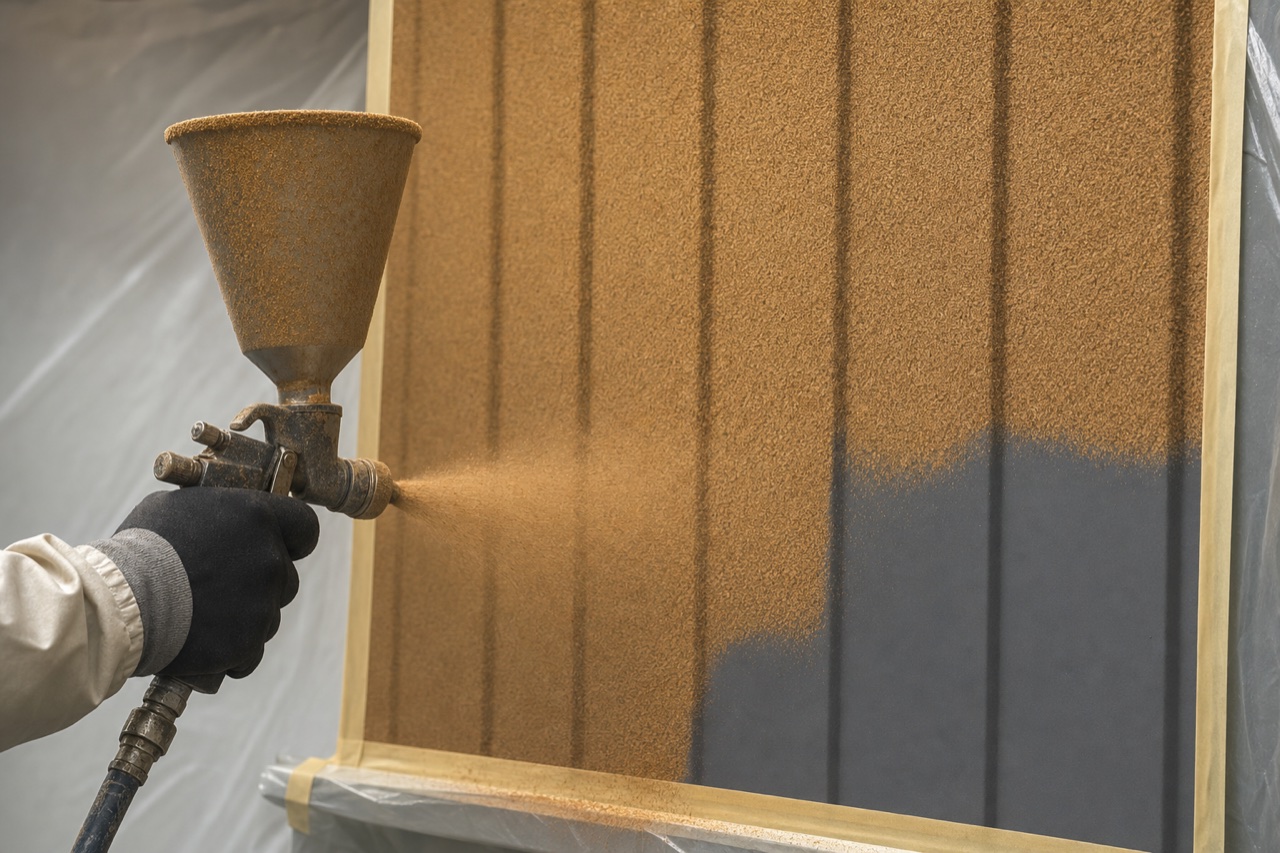
The coating follows complex contours and can support heat, moisture and acoustic properties. However, the interaction with the substrate, corrosion protection, other insulation materials and interior design remains crucial.
Insulation structure
Spray cork is not generally viewed as a replacement for classic insulation materials. The right structure depends on the vehicle, climate, use, space, weight and repairability.
From vehicle to structure
Insight into practice
A real, seamless application on walls, roof surfaces, ribs and complex contours. Recesses and connection points remain accessible for further expansion.


The coating also follows embossed body surfaces and complex geometries.
Defined recesses and connection points remain easily accessible.
Important basics for use in vehicle construction.
Not across the board. The required solution depends on usage, climate, vehicle design, available layer thickness and other insulation materials. Spray cork is assessed as part of the overall structure.
A coating with few joints can support moisture management. However, condensation is also influenced by thermal bridges, humidity, ventilation, temperature and the entire wall structure.
No. Corrosion and unstable layers must be professionally assessed and treated beforehand. The substrate and corrosion protection must match the coating system.
Layer thickness and number of work steps depend on the product, substrate, approved processing and desired function. A general thickness is not serious without a concrete system structure.
Suitability depends on body, existing coatings, interior design, use and accessible areas. Before planning, the specific structure should be checked.
The type of vehicle, photos of the interior surfaces, existing corrosion protection, planned expansion, travel profile, climate area and requirements for heat, humidity and acoustics are helpful.